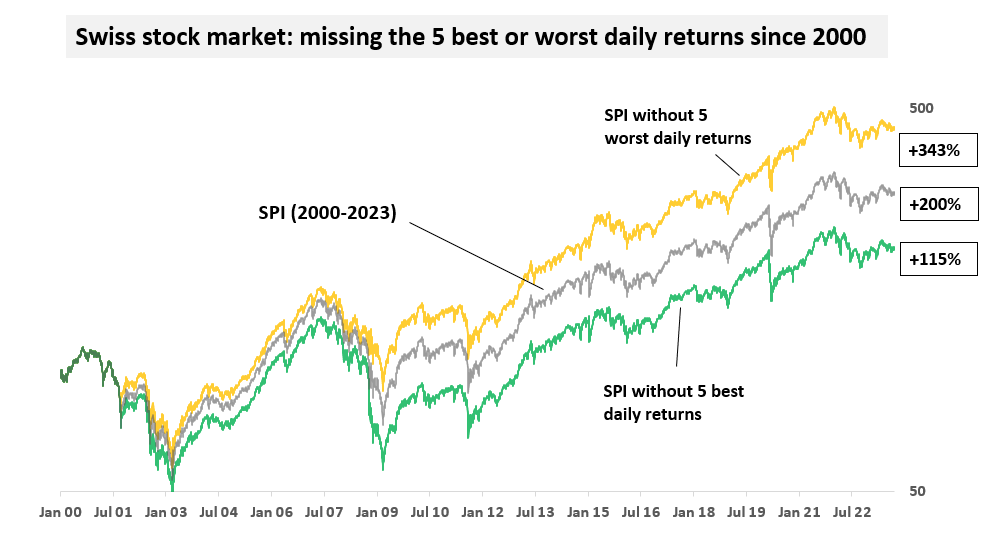
When it comes to market timing, it is often argued that missing the five best days can significantly hurt long-term performance—which is undeniably true. But what about the concept of avoiding the five worst days? Interestingly, this has an even greater positive impact (as the chart below of the Swiss stock market since 2000 illustrates).
Unfortunately, it’s not as simple as it sounds. The best and worst days typically occur during significant market downturns and are often very close to each other, sometimes just days apart. Therefore, trying not to miss the five best days also means being exposed to the five worst days—and vice versa.
📈 Ultimately, successful market timing is about risk management and the art of avoiding major drawdowns, which often involves missing both the best and worst days altogether.